


Bicycling Trails in Florida: Scenic Routes for Cyclists and Nature Lovers
Florida has quietly become one of the best cycling destinations in the United States. The combination of thousands of miles of multi-use trails, consistently mild winters, flat terrain that suits every skill level, and a landscape that includes everything from longleaf pine forests to mangrove-lined bridges makes for a cycling experience unlike anywhere else in the country. Whether you’re planning a weekend outing, a multi-day trip, or a bucket-list adventure, Florida has a trail that matches your goals.
This guide walks through the state’s best scenic cycling trails region by region, from the canopy-shaded rail-trails of the north to the tropical routes of the south. You’ll find specifics on major destination trails, along with practical information on how they connect into broader networks spanning coast to coast.
You’ll also find guidance on gear, safety, seasonal timing, and trip planning tailored to Florida’s specific conditions. The goal is to give you enough context and specifics to pick the right trail for your next ride, whether that’s a family outing or a serious long-distance tour through one of the most distinctive cycling landscapes in the country.
Why Florida Is Perfect for Year-Round Cycling: Climate, Terrain, and Scenic Beauty
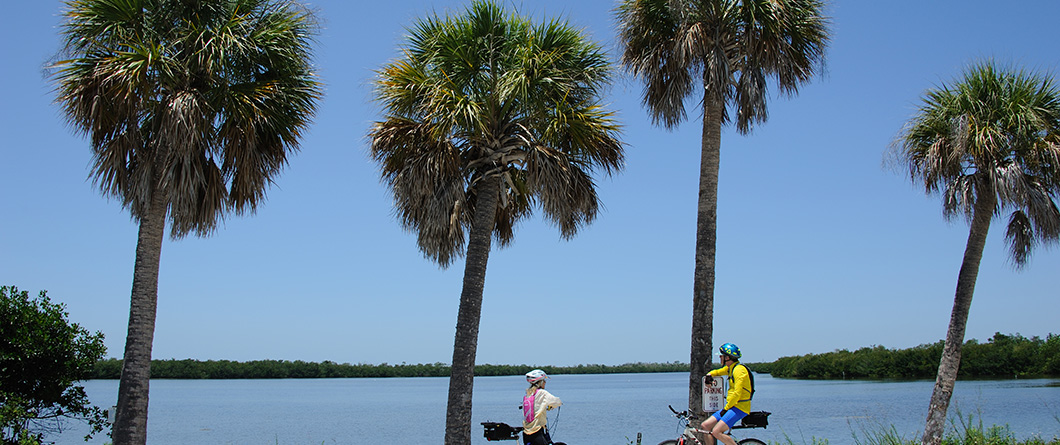
Florida’s reputation as a cycling destination isn’t built on mountain descents or high-altitude training routes. It’s built on something simpler and arguably more accessible: consistent riding weather, forgiving terrain, and a state-managed trail network that keeps growing. According to the Florida Department of Environmental Protection, the state’s Greenways and Trails System now includes roughly 7,500 miles of multi-use trails for hiking, bicycling, and equestrian use. For cyclists, that translates to an unusually dense network of paved rail-trails, greenways, and dedicated shared-use paths spread across every region.
The climate does a lot of the heavy lifting. Winter highs in the 60s and 70s across most of the peninsula mean you can ride comfortably in January, which is not something riders in most of the country can say. Summer brings heat and afternoon thunderstorms, so serious cyclists shift their schedules to early morning or evening rides, but the trails stay rideable nearly every day of the year. That 10-month comfortable riding window is why Florida draws so many snowbird cyclists and destination trail tourists from October through April.
Topography matters too. Florida is famously flat, with the highest point in the state sitting at just 345 feet. For casual riders, families, and anyone returning to cycling after a break, that absence of elevation is a feature, not a bug. You can pedal 30 miles on the Withlacoochee State Trail or the Pinellas Trail without facing a single real climb. For riders who want a challenge, the state still offers rolling terrain in the Panhandle, long-distance endurance routes like the Coast-to-Coast, and mixed-surface options through greenways and state forests.
What makes Florida genuinely distinctive for eco-minded cyclists is how closely the trails track the state’s natural systems. Routes pass through longleaf pine forests, cypress swamps, coastal hammocks, wildlife refuges, and spring-fed river corridors. You’re riding through ecosystems, not around them, and that connection to place is what sets Florida cycling apart from a treadmill ride or a pure exercise route.
North Florida’s Best Scenic Cycling Trails: Historic Rail-Trails and Canopy Roads
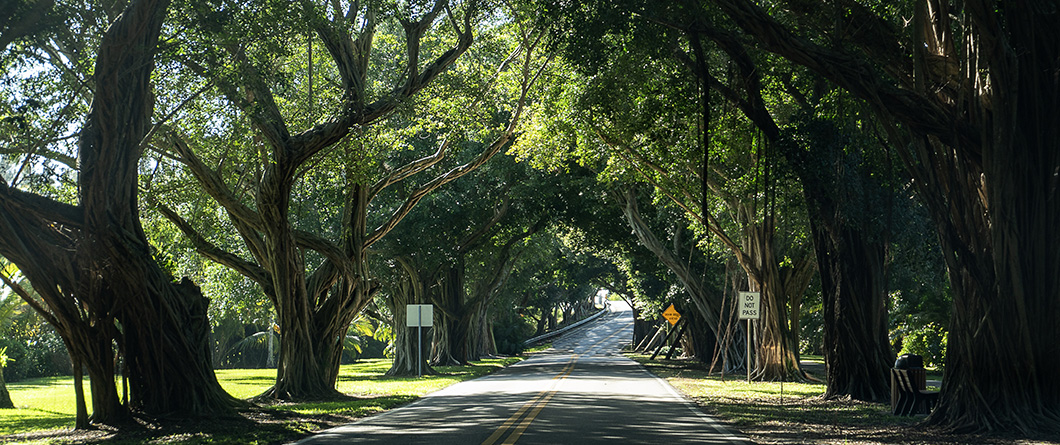
North Florida rides differently from the rest of the state. The terrain gets gentle hills, the tree canopy closes in tight over the trails, and the cultural feel skews closer to Old Florida than to beach tourism. Cyclists looking for shaded miles, historic rail corridors, and genuine solitude will find more of it up here than anywhere south of I-4.
The headline route is the Tallahassee-St. Marks Historic Railroad State Trail is a 20.5-mile paved corridor running from the state capital down to the Gulf Coast town of St. Marks. The trail follows the bed of Florida’s first chartered railroad, and most of the ride passes through longleaf pine forest and parts of the Apalachicola National Forest. Near the southern end, riders can detour to San Marcos de Apalache Historic State Park or continue on to the St. Marks National Wildlife Refuge.
A little east of there, the Gainesville-Hawthorne Trail covers 16 miles of paved rail-trail between Gainesville and the town of Hawthorne, passing alongside Paynes Prairie Preserve State Park. The prairie overlook about three miles into the ride is one of the more underrated wildlife-viewing spots on any Florida trail. Expect to see bison, wild horses, alligators, and a wide variety of birdlife. The trail connects to a broader Gainesville network, giving you roughly 22 continuous miles if you string the pieces together.
For riders looking for a longer route, the Jacksonville-Baldwin Rail Trail runs 14.5 miles through pine flatwoods and small-town Florida between Jacksonville and Baldwin. It’s wide, well-maintained, and one of the most popular rides in Northeast Florida. Further west in the Big Bend, the Nature Coast State Trail makes a 32-mile three-pronged route across the Suwannee River, connecting the communities of Fanning Springs, Chiefland, Trenton, and Cross City. The Suwannee River bridge crossing alone is worth the drive.
What is the oldest rail-trail in Florida?
According to Florida State Parks, the Tallahassee-St. Mark’s Historic Railroad State Trail was the first rail-trail in Florida’s Greenways and Trails System to be paved. The underlying railroad operated for 146 years from 1836 to 1983, longer than any other railroad in the state. The 20.5-mile paved corridor is also designated as a National Recreation Trail and forms a completed section of the developing 120-mile Capital City to the Sea Loop.
Central Florida’s Top Paved Bike Trails: Pinellas, West Orange, and Van Fleet
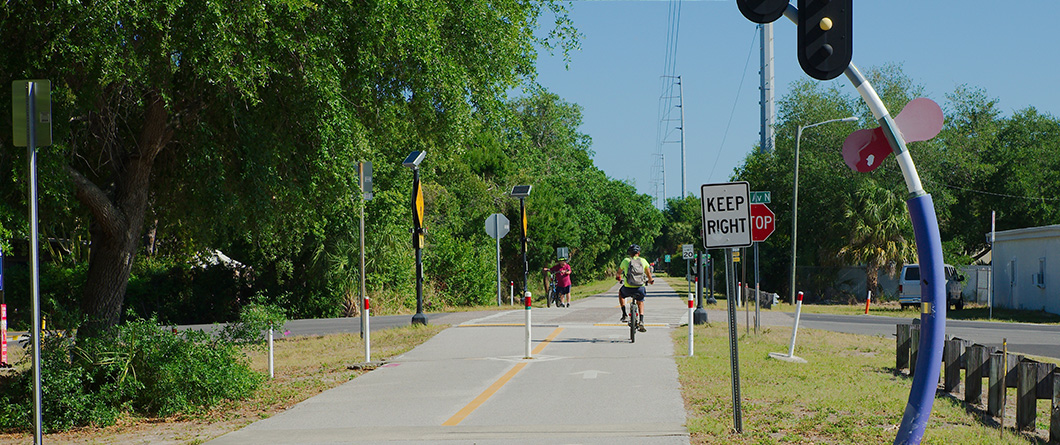
Central Florida has the state’s densest network of paved bike trails, and it’s the region most cyclists build their trips around. Much of what’s here connects into larger systems, which means you can ride for 50 or 60 miles on linked trails without ever having to share the road with a car.
The Fred Marquis Pinellas Trail is the most famous of the bunch. Running between St. Petersburg and Tarpon Springs, the trail covers 47 miles of paved corridor and is part of a larger 75-mile loop project circling the county. The ride passes through downtown Dunedin, Clearwater, and the Greek community of Tarpon Springs, with plenty of coffee shops, breweries, and restaurants right on the trail. It was inducted into the Rails-to-Trails Conservancy Hall of Fame in 2007, which is a real credential in this space.
Just west of Orlando, the West Orange Trail is Central Florida’s other headliner. The ride runs through the historic citrus-packing town of Winter Garden, whose downtown Plant Street has become a destination in its own right thanks in large part to the trail traffic. Families, recreational riders, and cycling clubs all use this corridor heavily, and Killarney Station at the western end offers bike rentals for visitors.
For riders wanting something quieter, the General James A. Van Fleet State Trail runs 29.2 miles through the Green Swamp between Polk City and Mabel. It’s the most remote of the Central Florida paved trails, with long uninterrupted stretches through wetlands and pine flatwoods. You’ll see more wildlife than people on most weekday rides. The Cross Seminole Trail adds another 27.6 miles connecting Oviedo through Winter Springs and up to the Seminole/Volusia county line, tying into the larger regional network.
How long is the West Orange Trail?
The West Orange Trail is a 22-mile paved multi-use corridor connecting Oakland, Winter Garden, and Apopka in Orange County, making it one of Florida’s most popular rail-trails. The trail serves as a key segment of the developing Florida Coast-to-Coast Trail and links westward to the South Lake-Lake Minneola Scenic Trail, extending the continuous paved ride to roughly 32 miles.
South Florida Coastal Cycling: Keys Overseas Heritage Trail and Tropical Routes
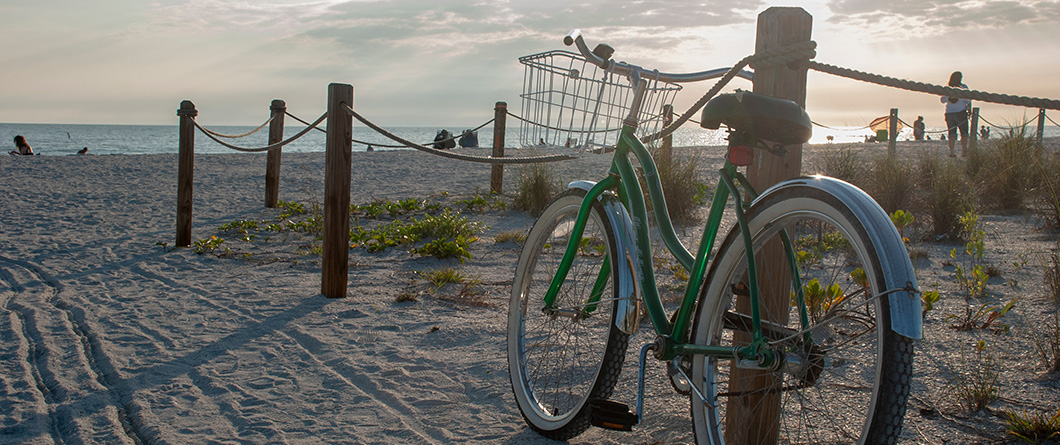
South Florida cycling has a character unlike anywhere else in the state. The rides here trade longleaf pine forests for mangroves, turquoise water, and a subtropical feel that makes even a short ride feel like a vacation. The crown jewel of the region is the Florida Keys Overseas Heritage Trail, which traces the path of Henry Flagler’s old Overseas Railroad across a string of islands stretching from Key Largo to Key West.
The Keys trail is one of the most distinctive rides in America. It uses a mix of dedicated bike paths, 23 historic Flagler Railroad bridges, and bike lanes alongside U.S. Highway 1 to link the islands together. The longest continuous paved section runs through the Upper Keys between Key Largo and Islamorada, which is also the safest and most family-friendly stretch. Riders who want the full experience of crossing the Seven-Mile Bridge between Marathon and Little Duck Key should note that this section shares a shoulder with fast-moving traffic and is better suited for confident cyclists.
Further up the coast, riders looking for ocean views can explore the paved trail network along A1A through Palm Coast and the Flagler Beaches, where more than 135 miles of trails connect beach access points, state parks, and the Intracoastal Waterway. For a more adventurous option, Shark Valley inside Everglades National Park offers a 15-mile paved loop through sawgrass prairie where alligators regularly sun themselves alongside (and sometimes on) the trail.
Shark Valley is genuinely unlike any other ride in the U.S. The trail is flat and well-maintained, but the main attraction is the wildlife. Riders in winter routinely encounter dozens of alligators, wading birds, turtles, and occasionally deer within a few feet of the path. A 65-foot observation tower at the halfway point gives you a panoramic view of the River of Grass before the ride back.
How long is the Florida Keys Overseas Heritage Trail?
According to Florida State Parks, the Florida Keys Overseas Heritage Trail features more than 90 linear miles of existing trail paved in segments along a planned 106-mile corridor from Key Largo to Key West. The trail incorporates 23 of the historic Flagler Railroad bridges and provides access to 10 Florida state parks, Everglades National Park, Biscayne National Park, and multiple national wildlife refuges along its route.
Lake Okeechobee Scenic Trail: Complete Guide to Florida’s Epic 110-Mile Loop
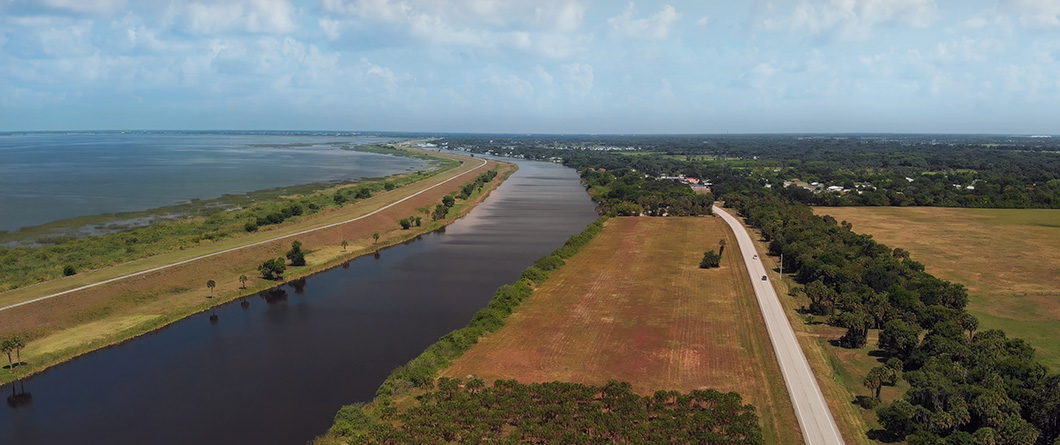
Lake Okeechobee is the second-largest freshwater lake contained entirely within the lower 48 states, and the Lake Okeechobee Scenic Trail (locally known as LOST) circles the entire thing. The trail sits atop the 35-foot Herbert Hoover Dike and runs roughly 109 miles around the lake, making it one of the only places in Florida where you can ride continuously with an unobstructed elevated view of a major inland water body.
LOST is not a trail for casual riders looking for a quick spin. The best sections for recreational cyclists are the 38-mile paved stretch between Moore Haven and Pahokee on the south side of the lake, and the 7-mile segment from the Kissimmee River to Taylor Creek on the north end. Clewiston makes a good base for multi-day exploration, with decent lodging and restaurants on the lake’s southern shore. Serious cyclists treat the full loop as a century ride and usually attempt it in cooler months.
Wildlife on the trail is exceptional. Expect to see alligators in the canals running parallel to the dike, plus wading birds, hawks, eagles, and wintering waterfowl in the surrounding wetlands. What LOST doesn’t offer is shade. The trail is fully exposed from start to finish, with only the occasional covered bench every two miles or so, so sun protection, hydration, and weather awareness are non-negotiable. Lightning on an open dike is a real risk during summer afternoons.
Is the Lake Okeechobee Scenic Trail open?
The Herbert Hoover Dike rehabilitation project reached substantial completion in January 2023 after 18 years of work around the 143-mile earthen dam surrounding Lake Okeechobee, with the Corps completing the effort three years ahead of schedule and under the estimated $1.8 billion budget. The project reopened the full Lake Okeechobee Scenic Trail loop to cyclists and hikers for the first time in nearly two decades, giving riders continuous access to roughly 109 miles of trail circling one of the largest freshwater lakes in the country.
Florida’s Multi-Use Trail Network: Connecting Communities Through the Coast-to-Coast Trail
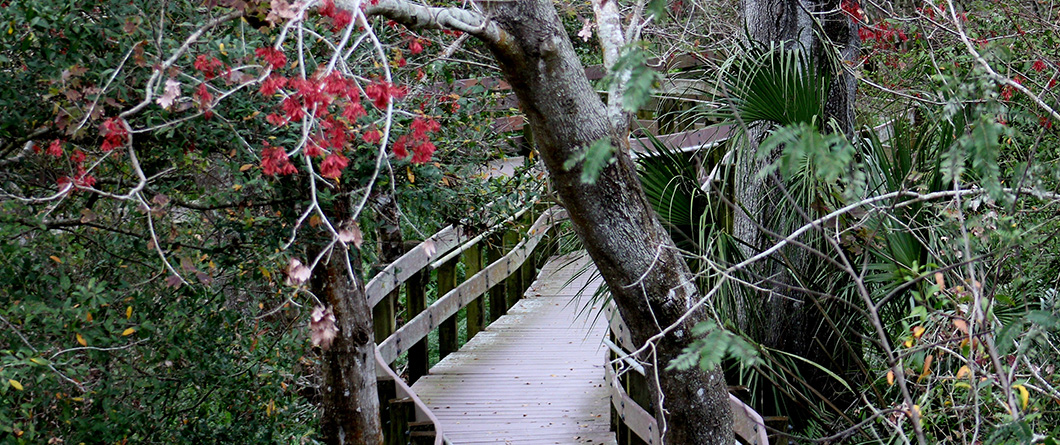
Florida’s paved trail network is increasingly connected, which means individual trails are becoming nodes in larger regional systems rather than standalone destinations. The biggest of these projects is the Florida Coast-to-Coast Trail (known as the C2C), an ambitious effort to create a continuous, paved, multi-use corridor running across the state from the Gulf to the Atlantic.
The C2C connects 17 existing trails into a single route between St. Petersburg and Titusville, threading through Central Florida and linking trail towns like Brooksville, Clermont, Winter Garden, and DeBary along the way. Most of the project relies on corridors already in use, but several new segments have been built to close gaps. The main outstanding gap is along State Road 50 in Sumter and Lake counties, which remains the focus of ongoing FDOT construction.
The broader Florida Greenways and Trails System Plan, administered by the Florida Department of Environmental Protection, ties the C2C into several other regional loops. The St. Johns River-to-Sea Loop connects the Atlantic Coast through Volusia County and back through Central Florida, and the Heart of Florida Loop runs through Polk, Osceola, and Orange counties. The East Coast Greenway stretches for more than 600 miles across Florida, using the state as its longest single segment on the 3,000-mile route between Maine and Key West.
For eco-minded cyclists, this network is meaningful because it deliberately threads through wildlife corridors, state parks, natural springs, and preserved working landscapes. The Florida Wildlife Corridor is a nearly 18-million-acre network of forests, rivers, ranches, and farms connecting the Everglades to the Georgia and Alabama borders, and multiple trail segments pass through or alongside its protected lands. Riding these trails becomes a way to experience Florida’s conservation story firsthand rather than just read about it.
How long is the Florida Coast-to-Coast Trail?
According to the Florida Department of Environmental Protection, the Florida Coast-to-Coast Trail will span approximately 250 miles once complete and is currently 88 percent finished, making it the first state trail of its kind in the United States. The corridor links communities between St. Petersburg and Titusville and spans most of the 51-mile East Central Regional Rail Trail, the longest single rail-trail corridor ever acquired by the Florida Office of Greenways and Trails.
Essential Cycling Gear and Safety Tips for Florida Bike Trail Adventures

Florida cycling comes with its own set of environmental considerations that riders coming from other climates sometimes underestimate. The combination of heat, humidity, sun exposure, afternoon thunderstorms, and specific wildlife encounters means a gear list that works in Colorado or Vermont doesn’t always translate. Preparing for these conditions is the difference between a great ride and a miserable (or unsafe) one.
Hydration is the single most important consideration, especially on exposed trails like the Lake Okeechobee Scenic Trail or Shark Valley. Most experienced Florida cyclists carry at least one liter of water per hour of planned riding, plus electrolyte replacement for rides longer than two hours. Heat exhaustion sneaks up fast when you’re generating your own breeze on a bike and don’t feel how much you’re sweating. Sun protection is close behind, with high-SPF sunscreen, a cycling cap under the helmet, and UPF-rated sleeves doing more for comfort than most riders expect.
Tire selection matters more in Florida than it does in most states. Paved trails are well-maintained, but many of the best rides involve mixed surfaces, especially on state forest connections and unpaved portions of trails like LOST. Most riders on Florida trails do well with a hybrid bike running 32-38mm tires, or a gravel bike if they want to tackle the rougher sections. Road bikes with narrow tires work on the main paved rail-trails but will struggle on sections where the surface transitions.
For gear beyond the basics, a Florida-specific packing list generally includes:
- A well-fitted helmet that meets federal safety standards (required by law for riders under 16, strongly recommended for adults)
- Front white light and rear red light, legally required between sunset and sunrise under Florida Statute 316.2065
- Bug spray containing DEET or picaridin, particularly for trails near wetlands or in summer months
- A basic repair kit with a spare tube, patch kit, tire levers, and a multi-tool
- A phone with offline trail maps downloaded, since cell coverage drops out on remote rural trails
Wildlife awareness is a real consideration. Alligators, snakes, iguanas (in the Keys), and the occasional bear in North Florida can all appear on or near trails. The rule is simple: give any animal a wide berth, don’t stop to take close-up photos, and never attempt to feed anything. Weather awareness matters too, as summer afternoon thunderstorms build fast, and being caught on an exposed dike like LOST during a lightning storm is a genuine emergency.
According to the Florida Department of Transportation, Florida law requires motorists to give cyclists a minimum of 3 feet of clearance when passing, which becomes relevant anywhere trails transition to on-road sections or shared bike lanes. Riders should also know that statewide, more than half of traffic crashes resulting in serious or fatal injuries to pedestrians and cyclists occur during dark or dusk hours, which is why front and rear lighting matters even on short evening rides.
Planning Your Florida Cycling Adventure: Best Seasons, Trail Maps, and Logistics
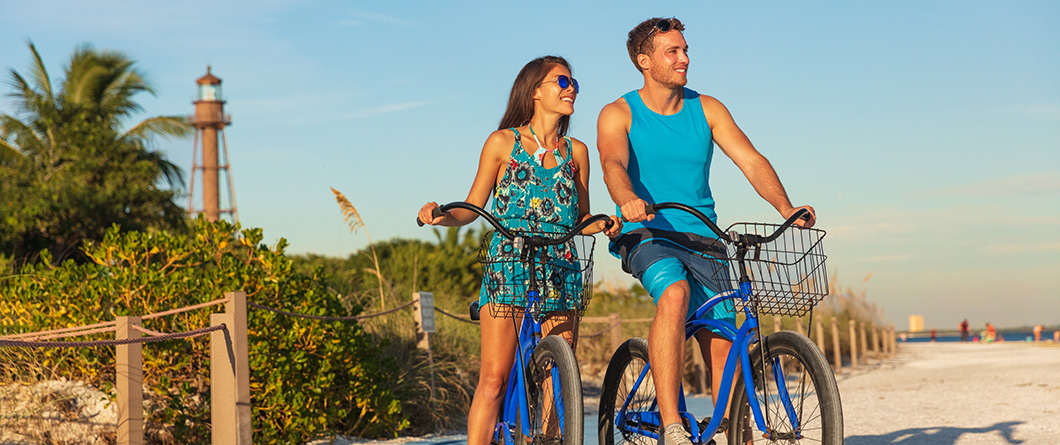
Timing a Florida cycling trip well makes an enormous difference in the experience. The sweet spot for most riders is late October through mid-April, when daytime highs settle into the 60s and 70s, humidity drops, and afternoon thunderstorm risk fades. This is also hurricane-free season, which makes planning multi-day trips more reliable. By May, temperatures climb into the 80s and 90s with humidity to match, and serious cyclists shift to early morning or evening rides to avoid the heat.
Choosing the right trail for your skill level is the next step. Families and casual riders do well on shorter paved rail-trails with good amenities, like the Pinellas Trail through Dunedin or the West Orange Trail through Winter Garden. Intermediate riders looking for longer routes can build an itinerary around the Coast-to-Coast Trail, linking multiple segments into a multi-day journey. For advanced cyclists, the full loop of LOST or a long ride through the Keys on the Overseas Heritage Trail is a bucket-list challenge.
Trail logistics are easier than in most states thanks to the well-connected Florida network. Most major trailheads have paved parking, restrooms, and posted maps, and popular destinations like the West Orange Trail and the Keys have bike rentals available nearby. Trail Town communities along the Coast-to-Coast route and elsewhere are increasingly catering to cyclists with bike-friendly lodging, repair stations, and dedicated rest stops. For the longest rides, packing a cue sheet or downloading offline maps is essential because cell coverage is unreliable along rural trail corridors.
A good starting point for planning is to pick a region and work outward from there. Central Florida has the densest trail network and the most options for first-time visitors, while North Florida offers more solitude and shade. The Keys and Everglades reward riders willing to travel for a once-in-a-lifetime experience. Whichever direction you head, our bicycling activity guide can help you find partner parks, preserves, and ride-friendly destinations across all five Florida regions to build a trip around.
Frequently Asked Questions About Bicycling Trails in Florida
What is the longest paved bike trail in Florida?
The Florida Keys Overseas Heritage Trail is the longest paved corridor in the state, with more than 90 miles of existing trail along a planned 106-mile route between Key Largo and Key West. The Lake Okeechobee Scenic Trail circles its namesake lake for roughly 109 miles, though only about 72% of that is paved. For a fully paved single-trail ride, the Fred Marquis Pinellas Trail at 47 miles is the longest continuous option.
When is the best time of year to bike in Florida?
Late October through mid-April is the ideal window for most riders, with comfortable daytime temperatures, lower humidity, and minimal thunderstorm risk. Summers are hot and humid, with near-daily afternoon storms, so experienced Florida cyclists shift to early-morning or evening rides. Hurricane season runs from June through November, which is another reason most destination cyclists plan trips in the cooler half of the year.
Are Florida bike trails family-friendly?
Many of them are extremely family-friendly. Trails like the West Orange Trail, the Pinellas Trail, the Gainesville-Hawthorne Trail, and the Upper Keys section of the Overseas Heritage Trail all feature flat terrain, paved surfaces, minimal road crossings, and nearby amenities. Families with young children do best on short out-and-back segments rather than attempting full trail distances, and bike rentals are widely available at trailheads like Killarney Station on the West Orange Trail.
Do I need a mountain bike for Florida trails?
No, though the right bike depends on where you plan to ride. For the paved rail-trails that make up most of the state’s network, a hybrid bike or road bike works fine. If you want to tackle unpaved sections of trails like the Lake Okeechobee Scenic Trail or explore state forest connections, a hybrid with wider tires or a gravel bike handles mixed surfaces better. Mountain bikes are only needed for dedicated off-road trails at places like Santos in Ocala or Markham Park in Sunrise.
What wildlife might I see while cycling in Florida?
Wildlife is one of the best parts of cycling in Florida. Depending on the trail, you can expect alligators (especially at Shark Valley and along the LOST canals), wading birds like great blue herons and ibises, turtles, deer, wild horses and bison at Paynes Prairie, and the occasional river otter or black bear in North Florida. The Keys trails offer their own mix of wildlife, including iguanas, key deer, and sea turtles. Give all animals a wide berth, never stop to feed or approach them, and keep moving if you encounter an alligator on or near the trail.
