


Florida’s Natural Springs Guide: Best Swimming, Kayaking, and Snorkeling Spots
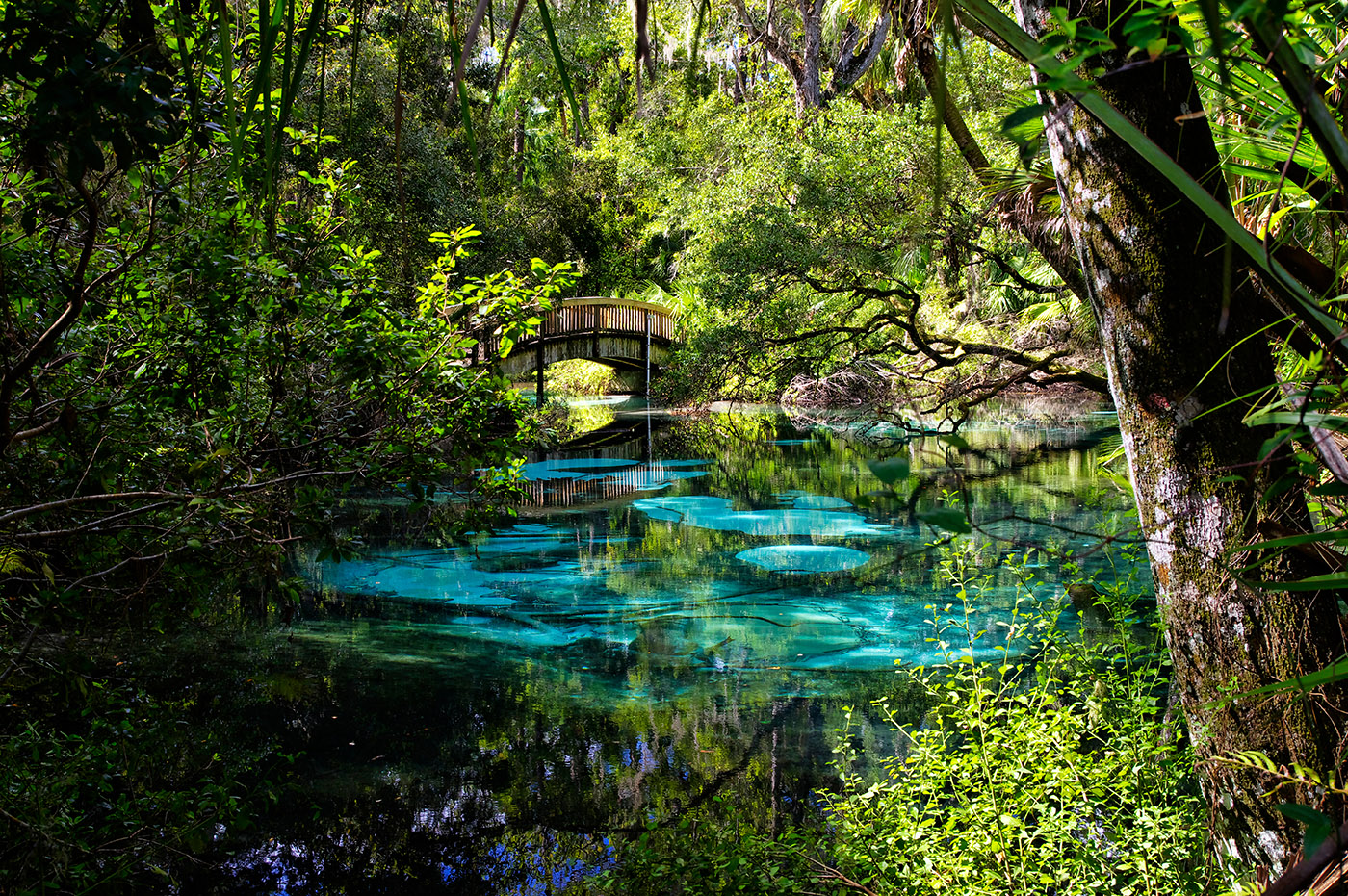
Step into a Florida spring, and the first thing you notice is the clarity. Sunlight reaches the sandy bottom, schools of fish hover in water that looks more like air, and the cool spring pool feels like a reward after a humid afternoon. These freshwater pools, runs, and caverns are among the most distinctive natural features in the state, drawing swimmers, paddlers, snorkelers, and divers year-round.
Each region of Florida offers its own version of the springs experience. North Florida’s spring-fed rivers are made for slow tubing trips, the Ocala National Forest hides shaded swimming holes among its sand pine scrub, and Central Florida’s springs sit within an easy drive of Orlando. Crystal River and Blue Spring welcome manatees each winter, while the cave systems of the Suwannee River basin attract certified divers from around the world. Knowing which spring fits your plans, when to go, and how to protect these waters makes every visit better.
Why Florida’s 1,000+ Natural Springs Are Unlike Anywhere Else in the World
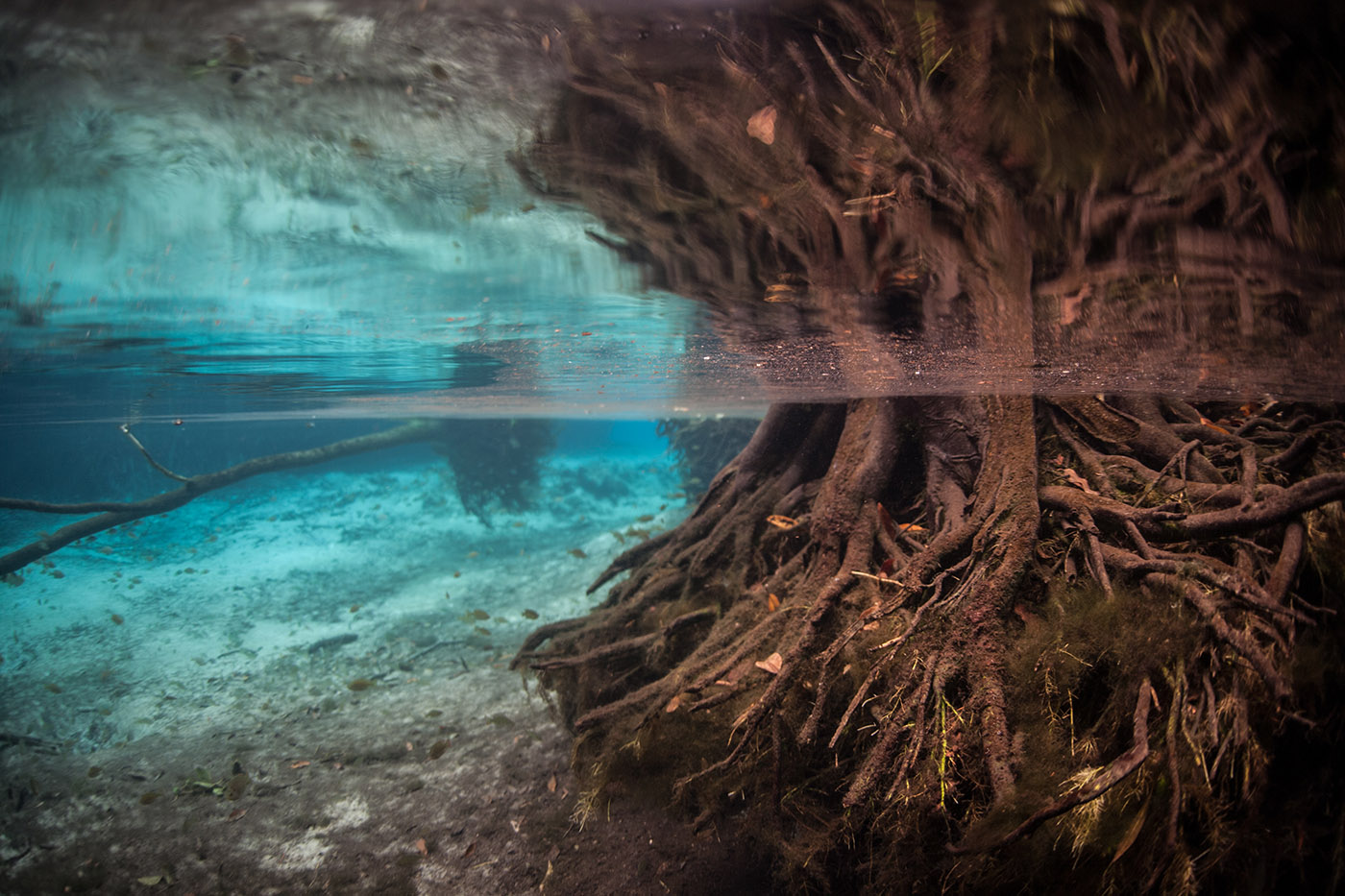
Florida sits atop the Floridan Aquifer, a vast underground reservoir stored in porous limestone. Over thousands of years, slightly acidic rainwater has dissolved channels, caves, and sinkholes into that rock. Where groundwater is under sufficient pressure, it rises through natural openings called vents and spills onto the surface, forming a spring pool or a flowing spring run. Some vents release a gentle trickle, while the largest feed entire rivers.
Because the water rises from deep underground, it holds a cool, steady temperature through every season. That consistency makes Florida’s springs feel refreshing in August and comfortable in January, and it’s also why manatees seek out spring-fed waters when nearby rivers and the Gulf turn cold. Water that filters slowly through limestone also gives many springs their famous clarity, so you can watch turtles and fish glide past from the surface.
Few places on Earth hold as many freshwater springs as Florida, and the variety is as impressive as the number. Some are wide, sand-bottomed swimming holes with gentle entries for kids. Others feed miles-long spring runs lined with cypress and oak, ideal for kayaks, canoes, and tubes. A handful open into underwater caverns that draw trained cave divers from across the globe. Browsing Florida springs for swimming and snorkeling can help you match a spring to the kind of day you have in mind.
The springs carry deep history, too. People have gathered at these waters for thousands of years, and several later became roadside attractions with glass-bottom boats before the state stepped in to protect them. Today, most of the best-known springs are managed as state parks, national forest recreation areas, or wildlife refuges, which keep them open to the public while protecting the surrounding ecosystems.
How many natural springs does Florida have?
Florida has more than 1,000 recognized springs, each with its own character. These springs form where groundwater from the Floridan Aquifer flows out through natural openings in the limestone called vents. Scientists classify each spring by magnitude, which measures how much water it discharges, and springs with enough flow create a pool or a spring run. The Florida Geological Survey maintains the state’s official springs dataset and continues to verify newly reported springs, so the total can grow over time.
North Florida Springs: Ichetucknee, Ginnie Springs, and the Santa Fe River Corridor
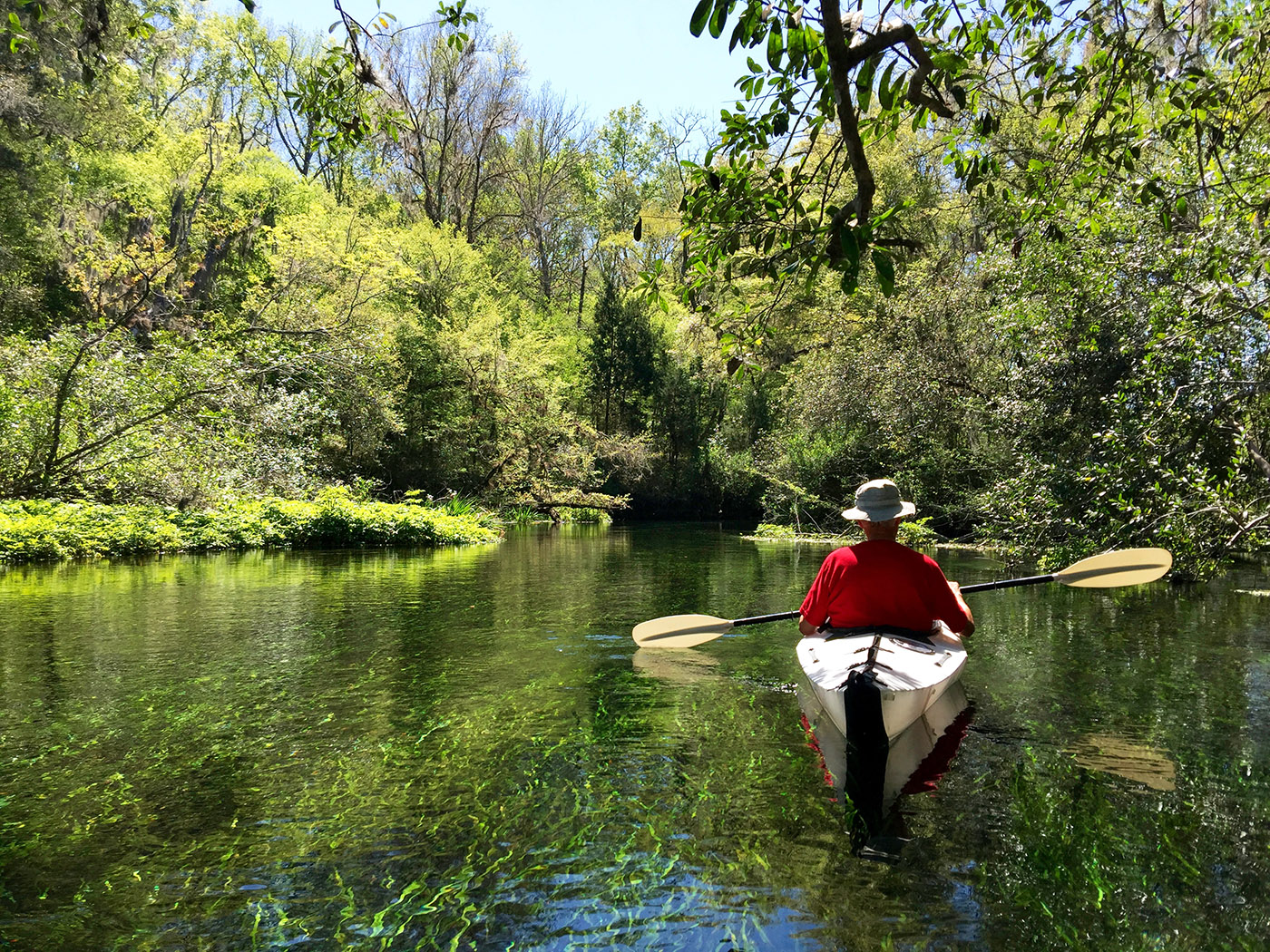
North Florida holds some of the clearest, most photographed springs in the state, and many of them feed into the Santa Fe River as it winds toward the Suwannee. The region’s rural setting, shaded hardwood forests, and steady spring flow make it a favorite for tubing, paddling, snorkeling, and diving. Exploring parks and outdoor adventures across North Florida can turn a single spring visit into a full weekend, with a lazy float down a spring run in the morning and a swim in a turquoise basin by afternoon.
Ichetucknee Springs State Park is the region’s headliner. A group of springs combines to form the Ichetucknee River, which flows through hammocks, wild rice marshes, and floodplain forest before joining the Santa Fe. Tubing is the signature experience, especially in summer, and the gentle current carries visitors past eelgrass beds, turtles, and wading birds with almost no effort. The headspring and Blue Hole draw swimmers and snorkelers, and Blue Hole is open to cave-certified divers. To protect the river’s fragile vegetation, the park manages access to certain sections during busy periods and doesn’t allow disposable food and drink containers on the water.
Ginnie Springs sits a short drive away along the Santa Fe River near High Springs. It’s a privately owned park, so entry works differently than at a state park, but the draw is the same: crystal-clear water. The springs are popular with snorkelers and open-water divers, and the underground passages below attract trained cave divers. Many visitors also tube or paddle the Santa Fe itself, where the dark, tannic river water meets the bright blue spring outflow in a striking line of color.
The Santa Fe River corridor ties the region together. Smaller springs dot its banks, and public parks like Gilchrist Blue Springs State Park and Poe Springs Park offer quieter places to swim and launch a kayak. Paddlers can spend a full day hopping between spring runs, pulling over at clear-water coves to cool off along the way. Florida’s kayaking and canoeing trails offer plenty of options for planning a longer trip in this part of the state.
Timing makes a big difference in North Florida. Summer weekends bring the biggest crowds, especially on the tubing runs, while weekday mornings and the shoulder seasons offer calmer water and easier parking. The springs stay at a cool temperature year-round, so a fall or spring visit still offers a refreshing swim with fewer people around.
How much water flows through the Ichetucknee River each day?
The springs at Ichetucknee Springs State Park push out more than 200 million gallons of water a day to form the Ichetucknee River. That steady flow keeps the river cold and remarkably clear as it travels through the park before emptying into the Santa Fe River. Consistent spring flow also supports the eelgrass beds, fish, and wildlife that make the Ichetucknee one of North Florida’s most popular places for tubing, snorkeling, and paddling.
Ocala National Forest Springs: Alexander, Juniper, and Salt Springs for Swimming and Diving
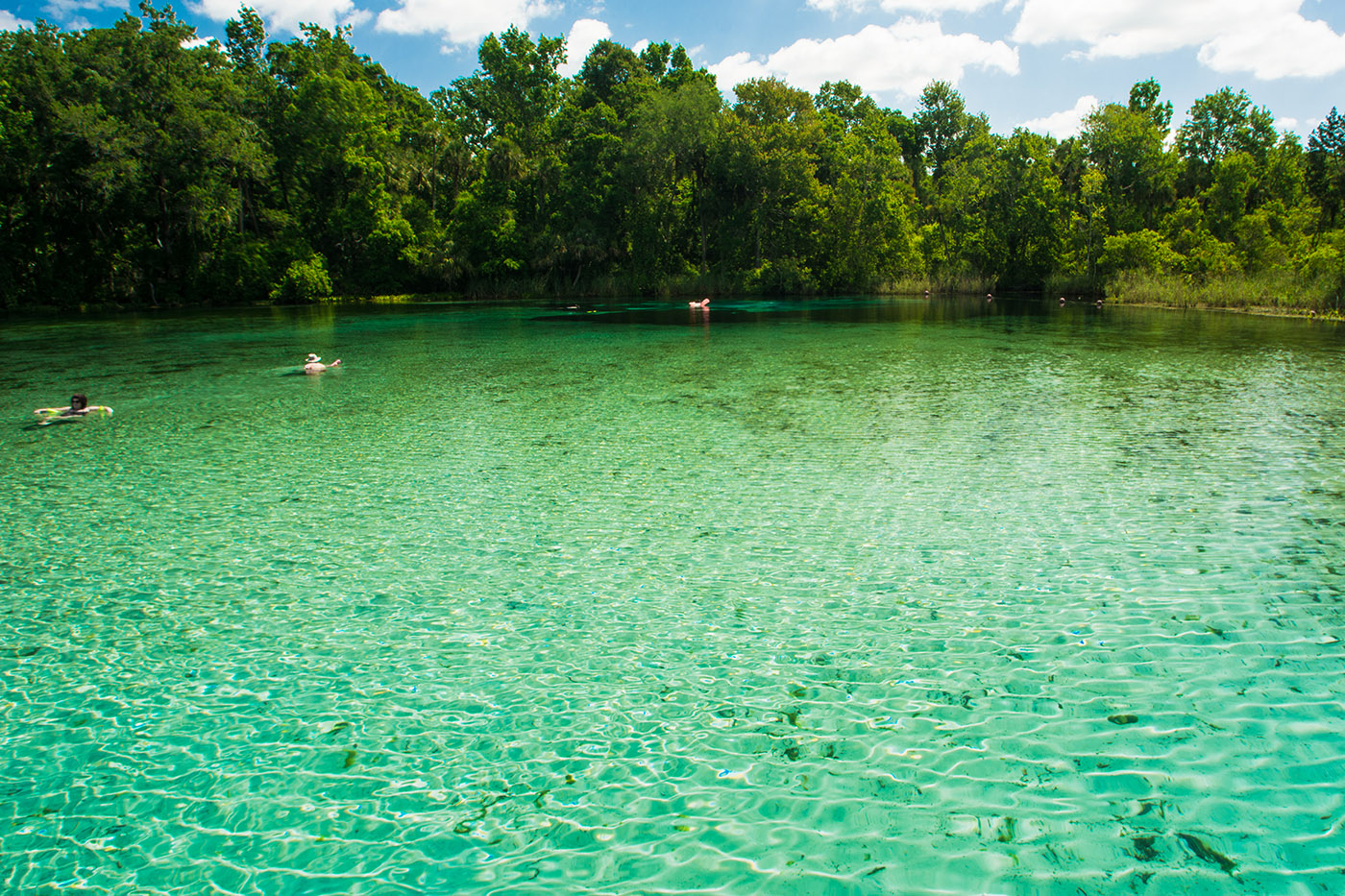
The Ocala National Forest spans 383,000 acres across four counties and protects the world’s largest contiguous sand pine scrub forest, so its springs feel far removed from the busy highways nearby. Three recreation areas anchor the forest’s spring country, each with its own personality. Because much of the land around them remains undeveloped, the forest is a natural stop for anyone exploring the springs and wild places of Central Florida.
Alexander Springs is the forest’s most family-friendly swimming hole. A sandy beach slopes gently into a wide spring basin, which lets younger swimmers wade in slowly while stronger swimmers head for the deeper water near the boil. Snorkelers can watch small fish dart over sand and limestone, and certified divers can explore the broad mouth of the spring in open water. It’s a favorite training ground for newer divers, and it pairs well with other scuba diving destinations around Florida for anyone planning a dive-focused trip. Canoes and kayaks can head down Alexander Run into the Alexander Springs Wilderness, where birding along the shoreline is excellent, and the shaded Timucuan Trail boardwalk winds through a lush palm hammock beside the spring run.
Juniper Springs offers a more historic setting. A stone mill house and waterwheel sit beside the walled swimming pool, and the surrounding forest shades picnic areas and campsites. The main attraction for many visitors is Juniper Run, a narrow, winding spring run that twists through the Juniper Prairie Wilderness under a dense canopy. Paddlers who enjoy tight turns and quiet water tend to love it. The trip runs one way, so plan for a pickup at the take-out. Hikers can pair a swim with a walk on the Ocala National Forest hiking trails near Juniper Springs, which are especially pleasant in the cooler months.
Salt Springs sits in the northern part of the forest and stands out for its mineral-rich water, which gives the spring its name and a slightly salty taste. The swimming area is calm and clear, and the spring run flows toward Lake George, making it popular with paddlers and boaters who want to extend their day on the water. Its quieter reputation has earned it a spot among Florida’s best hidden gem springs.
Planning ahead pays off in the Ocala National Forest. The recreation areas fill up on weekends and may close temporarily once they reach capacity, so early arrival makes for an easier day. On summer weekends and holidays, Alexander Springs requires a timed vehicle reservation. Visitors who plan to hop between springs can look into the forest’s Springs Hopper Pass, which covers entry to several spring recreation areas, including Alexander and Juniper. Pets aren’t allowed in the Alexander Springs day-use area, so plan accordingly if you travel with a dog.
Can you scuba dive in the Ocala National Forest?
You can scuba dive in the Ocala National Forest only at Alexander Springs, which is one of the first-magnitude springs in Florida and the single spot in the forest where scuba diving is permitted. Divers explore the broad mouth of the spring in open water, surrounded by a cool, exceptionally clear basin with a sandy bottom and limestone features. The gentle slope and easy entry make Alexander Springs a popular choice for newly certified divers and snorkelers.
Rainbow Springs State Park: 493 Million Gallons Daily and World-Class Kayaking in Dunnellon
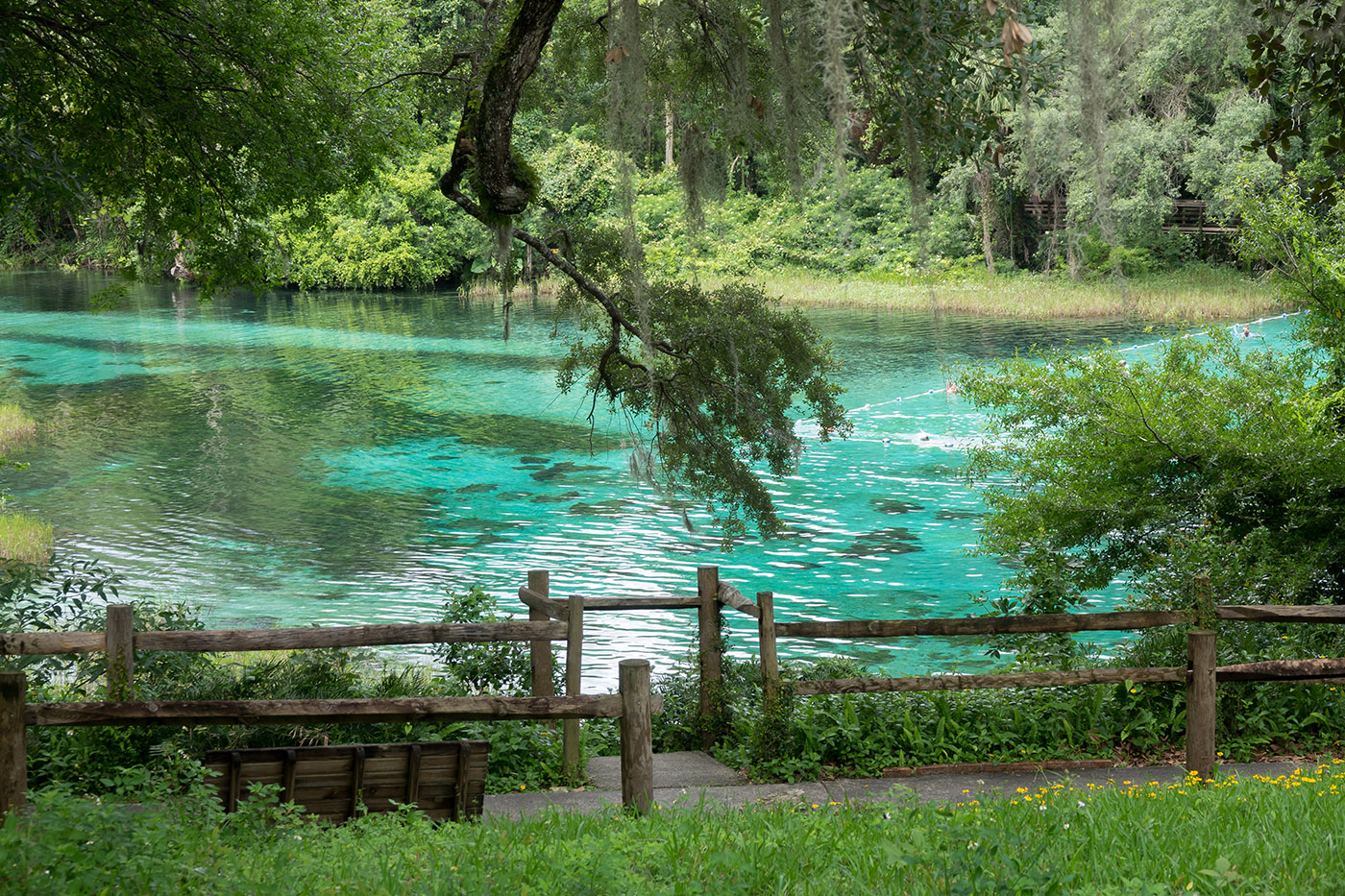
Rainbow Springs rises just north of Dunnellon, where a cluster of vents pours out enough water to form an entire river at the headspring. Before it became a state park, the site drew visitors as a roadside attraction with glass-bottom boats, and remnants of that era still add charm to the grounds. Today, the manmade waterfalls, azalea gardens, and shaded walking paths frame one of the clearest spring runs in Florida, and the water itself remains the main event.
The Rainbow River runs nearly 6 miles from the headspring to its meeting point with the Withlacoochee River, and paddling it is one of the best ways to experience the springs of west-central Florida. The current is gentle, and the water is so clear that kayakers can watch turtles, fish, and swaying eelgrass pass beneath the hull. Otters, wading birds, and the occasional manatee add to the scenery. Paddlers who launch from the headspring area can drift downstream and work their way back against the mild current, which makes a comfortable round trip for most skill levels. Comparing kayaking and canoeing trails across Florida is an easy way to line up the Rainbow River with other spring runs for a paddling-focused trip.
Swimming at the park centers on a designated area at the headspring, where the water remains cool and clear year-round. Snorkelers can float over sandy patches and limestone ledges while schools of fish move through the vents below. Farther down the river, tubing offers a slower way to take in the scenery, with the park’s separate tubing entrance and Marion County’s K.P. Hole Park giving visitors access to the lower stretch of the river during the warmer months.
The Rainbow River’s clarity comes with a responsibility to protect it. The river holds special state designations for its water quality and ecological value, and visitors help by staying off the eelgrass, packing reusable containers, and carrying out everything they bring. Launching and landing only at designated access points helps keep the riverbanks intact for the next group of paddlers.
Rainbow Springs also makes a strong base for a longer stay. The park’s campground sits along the river, putting early-morning paddles and quiet evening swims within easy reach. Travelers weighing overnight options can look at camping near Florida springs to build a multi-day trip around Rainbow Springs and other spring parks in Marion County.
How much water does Rainbow Springs produce?
Rainbow Springs is the fourth-largest spring in Florida and discharges an average of 493 million gallons of water per day into the Rainbow River. That powerful, steady flow keeps the river exceptionally clear as it travels to the Withlacoochee River near Dunnellon. The Rainbow River is also designated an Outstanding Florida Water and an Aquatic Preserve, recognitions that reflect its value for wildlife, water quality, and recreation.
Crystal River and Three Sisters Springs: Snorkeling With Manatees in Florida’s Gulf Coast Springs
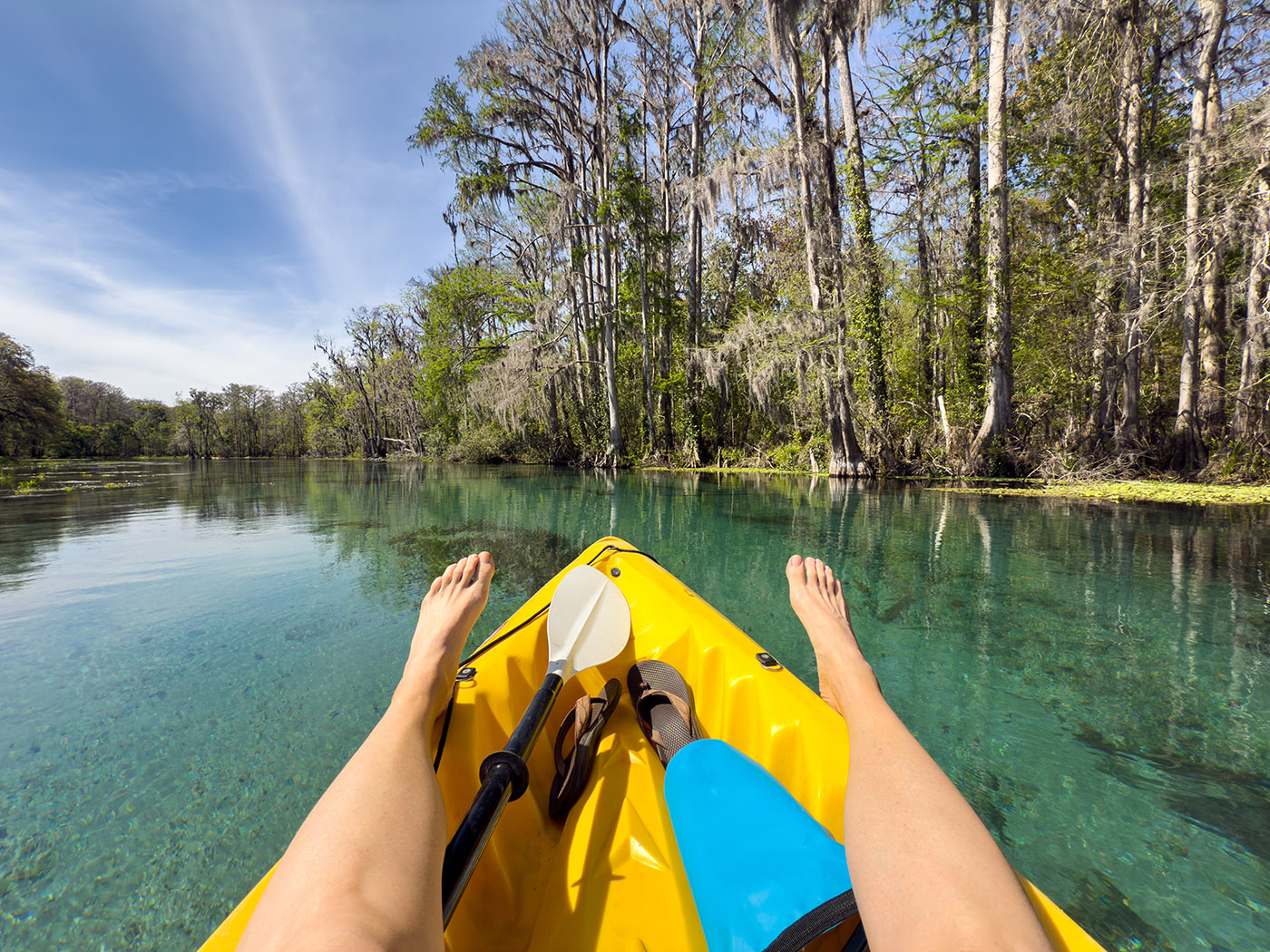
Crystal River sits along Florida’s Gulf Coast, where dozens of springs feed Kings Bay, a shallow, spring-fed bay at the head of the Crystal River. The bay’s warm, steady water draws manatees in from the Gulf each winter, and it has become one of the few places in the country where visitors can legally swim and snorkel in the same waters as wild manatees. Clear springs, calm water, and a small-town waterfront make it a rewarding trip in any season.
Three Sisters Springs Refuge is the crown jewel of Kings Bay. Three spring basins with shimmering blue water sit inside a protected refuge, and a boardwalk wraps around the springs for visitors who prefer to watch from land. Paddlers and snorkelers can enter the springs from the water, where the view of manatees resting over white sand is unforgettable. On colder days or when large numbers of manatees gather inside the springs, the refuge may temporarily close the springs to in-water visitors until conditions allow people back in. Checking the refuge’s latest updates before heading out keeps plans flexible.
Snorkeling with manatees follows a simple guiding principle: passive observation. Visitors float quietly at the surface, keep their distance, and let the animals approach on their own terms. Touching, chasing, surrounding, or feeding manatees is prohibited throughout Kings Bay, and certain areas become manatee sanctuaries during winter, where no people are allowed at all. Guided snorkel tours brief visitors on these rules before they enter the water, and the calmest encounters tend to occur when swimmers stay still and relaxed.
Kings Bay offers plenty to enjoy beyond Three Sisters. Hunter Springs Park is the most accessible spring on the bay and stays open to swimming year-round, with a sandy beach, a kayak launch, and a boardwalk for manatee viewing. Paddlers can explore the bay’s many spring vents and canals by kayak or paddleboard, and snorkelers can find clear water near several springs outside of the peak manatee months.
Timing shapes the experience in Crystal River. Winter brings the most manatees and the most visitors, so booking tours early and arriving at first light makes for a more peaceful outing. Warmer months see fewer manatees in the springs, but the water stays just as clear, and the bay is quieter for swimming and paddling. Visitors who want both can plan a winter trip for the manatees and return in spring or fall to explore Kings Bay at a slower pace.
Why is Crystal River important for manatees?
Crystal River National Wildlife Refuge, established in 1983, is the only refuge created specifically to protect the threatened Florida manatee. The refuge preserves Three Sisters Springs, the last undeveloped spring habitat in Kings Bay, and maintains critical warm-water habitat that manatees depend on during cold weather. Manatee season at Three Sisters Springs runs from mid-November through March, when the refuge offers daily ranger-led programs for visitors.
Central Florida Springs Near Orlando: Wekiwa, Blue Spring State Park, and Rock Springs Run
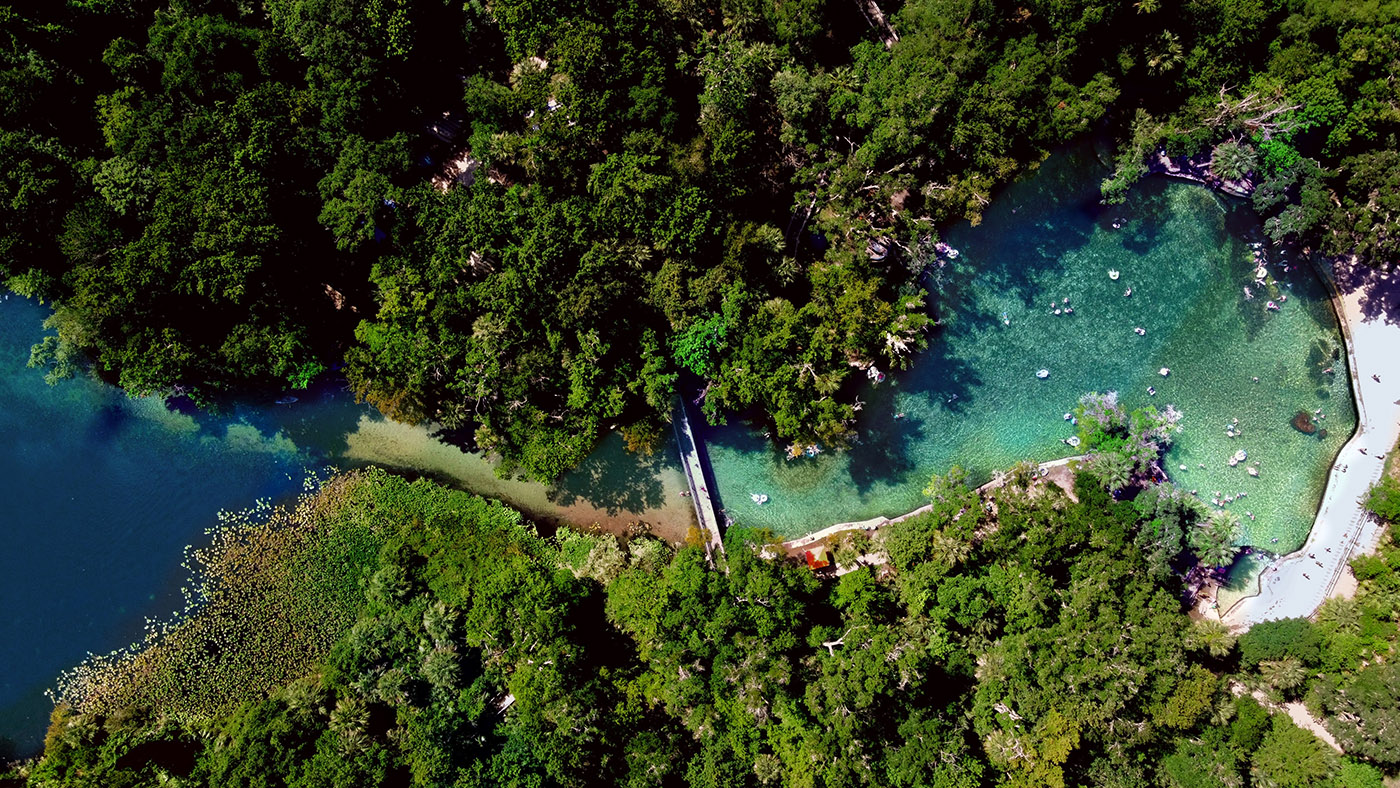
Some of Florida’s most rewarding springs sit within an easy drive of Orlando’s attractions, making a morning swim or an afternoon paddle easy to fit into a vacation. The springs north of the city feed the Wekiva River system and the St. Johns River, where shaded hammocks, clear runs, and abundant wildlife offer a quieter side of outdoor adventures in Central Florida. Many visitors are surprised to find this much wild water so close to the theme park corridor.
Wekiwa Springs State Park in Apopka is the classic starting point. The headspring flows into a wide swimming area with a gentle, shallow entry, and snorkelers can drift over sand and limestone in cool, clear water. From the spring, Wekiwa Run carries kayakers and canoeists toward the Wekiva River, where otters, turtles, wading birds, and alligators sunning on the banks are common sights. The park’s trails wind through sandhills, pine flatwoods, and hardwood hammocks, so a swim can easily turn into a full day outdoors. Downstream, the river passes Lower Wekiva River Preserve State Park, where the landscape grows wilder, and paddlers looking for food and rentals along the way can experience Wekiva Island like a local.
Rock Springs Run offers a different flavor of the Wekiva system. The run begins at Rock Springs in Kelly Park, an Orange County park known for its clear, cool water and a lazy tubing route that carries swimmers downstream through a shaded forest. Beyond the park, Rock Springs Run winds through Rock Springs Run State Reserve on its way to the Wekiva River, giving paddlers a quiet, scenic stretch with few signs of development. The run is part of a designated National Wild and Scenic River system, which helps keep its banks natural and its water clean.
Blue Spring State Park, near Orange City, sits along the St. Johns River and is best known as a winter refuge for manatees. When river temperatures drop, manatees move into the spring run to stay warm, and boardwalks along the run give visitors close views without disturbing them. During manatee season, the spring run closes to swimming and paddling so the animals can rest undisturbed, and it reopens for swimming, snorkeling, and tubing once the manatees move back into the river. The boardwalk views also make Blue Spring one of Florida’s best wildlife photography spots during the cooler months.
Crowds are the main planning challenge near Orlando. Wekiwa Springs, Kelly Park, and Blue Spring often reach capacity on warm weekends and holidays, and parks may close their gates until space opens up. Arriving right at opening, visiting on weekdays, and checking each park’s status before leaving home make for a smoother day. Travelers planning a longer itinerary can browse more ecotourism destinations around Orlando to pair a spring visit with other nearby nature experiences.
How many manatees gather at Blue Spring State Park in winter?
Blue Spring State Park is one of the largest winter gathering sites for manatees in Florida. Park staff counted a record 932 manatees in the spring run on January 21, 2024, surpassing 736 from New Year’s Day. Manatees move into the spring run when the St. Johns River cools, since the spring water stays warmer than the river through the winter. Visitors can watch the gathering from boardwalks along the spring run during manatee season, when in-water activities pause to protect the animals.
Best Florida Springs for Scuba Diving and Cave Exploration: Peacock Springs and Morrison Springs
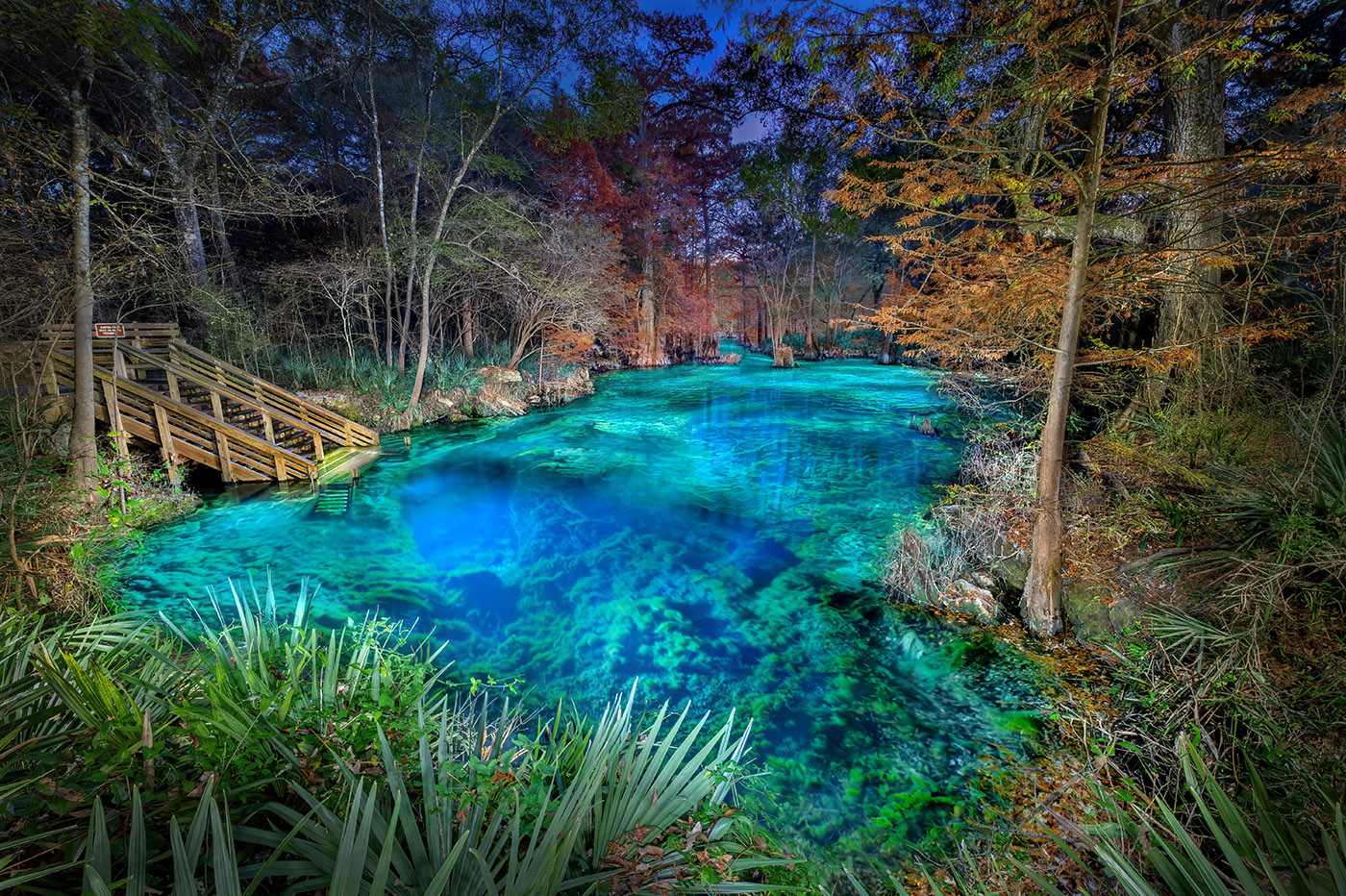
Florida’s springs are more than surface pools. Beneath many of them, the same limestone that filters the water opens into caverns, tunnels, and flooded rooms that stretch far into the aquifer. That hidden world has made the state one of the most sought-after freshwater diving destinations anywhere, and the list of dive-friendly springs runs long. Divers comparing options can start with scuba diving destinations across Florida, and two springs in North Florida and the Panhandle stand out for very different reasons.
Wes Skiles Peacock Springs State Park, in Suwannee County near Live Oak, is a bucket-list site for trained cave divers. The park protects two major springs, a spring run, and six sinkholes, all connected by a vast underwater cave system that divers have mapped over decades of exploration. Peacock is also a popular place to train new cave divers, with multiple entry points leading into passages of varying sizes. Above ground, an interpretive nature trail traces the path of the tunnels below, so non-divers can follow the cave system on foot through a mature hardwood forest. When conditions allow, swimmers and snorkelers can enjoy Peacock Springs and Orange Grove Sink during the warmer months.
Morrison Springs, in Walton County, is a favorite in Northwest Florida’s outdoor scene and a friendly spot for a wider range of divers. Its 250-foot-wide spring pool discharges an average of 48 million gallons of water each day, framed by old-growth cypress trees rising from the water. Open-water divers can explore the sandy basin and the openings around the vents, while cave-trained divers can descend into the deeper cavities below. A diving dock and boardwalks make entry easy, and a separate boat ramp downstream keeps paddlers away from the dive area. Swimmers, snorkelers, and kayakers share the spring on busy days, so it works well for groups with mixed interests.
Safety and training matter more in the spring than almost anywhere else. Many Florida springs require scuba diving certification, and entering an overhead environment, such as a cave, calls for specialized cave-diving training, proper lighting, and redundant gear. Open-water and cavern divers should stay within the limits of their training, and anyone new to spring diving can benefit from a guided dive with a local instructor. Florida’s best scuba diving and snorkeling guide covers certification, gear, and additional dive sites to help plan a full underwater itinerary.
Conservation is part of every dive. Cave systems hold fragile formations, sediment, and rare cave-dwelling animals that can take years to recover from careless contact. Divers help protect these places by maintaining good buoyancy, keeping fins off the bottom, and following each park’s rules for dive entry points and hours.
How long is the underwater cave system at Peacock Springs?
Divers at Wes Skiles Peacock Springs State Park can explore nearly 33,000 feet of surveyed underwater passages, making it one of the longest underwater cave systems in the continental United States. The park’s two major springs and six sinkholes provide access to the system, and cave divers travel from around the world to explore it. Only divers who show proof of scuba certification are permitted to enter the underwater caverns.
Tips for Visiting Florida Springs: Crowds, Entry Fees, Best Times, and Conservation Guidelines
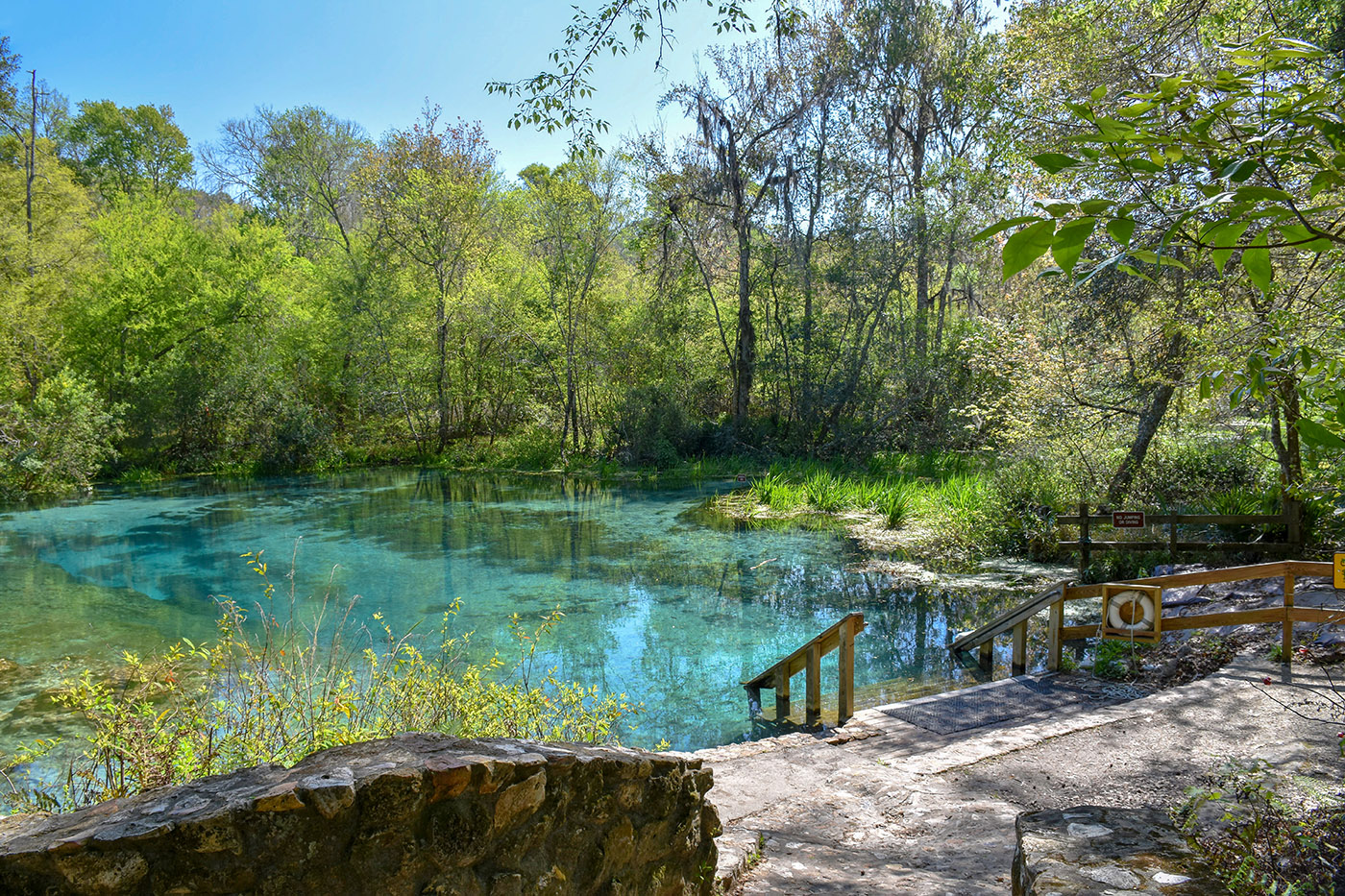
A little planning goes a long way at Florida’s springs. The most popular parks can fill up by midmorning on warm weekends, rules differ from one spring to the next, and the water itself depends on visitors treating it with care. Knowing what to expect before you pack the car makes for a calmer, more rewarding day on the water, and browsing Florida springs for swimming and snorkeling can help narrow down where to go.
Crowds are the biggest variable. Many springs cap the number of vehicles allowed inside and close their gates once they reach capacity, sometimes reopening only as other visitors leave. Arriving right at opening time is the most reliable way to get in, especially on summer weekends and holidays. Weekday visits are noticeably quieter, and some parks require advance reservations during peak season, so checking each park’s current status and booking policies before you leave helps you avoid a wasted drive.
Entry fees vary by who manages the spring. Florida State Parks generally charge a per-vehicle entry fee, with separate fees for camping, rentals, and some tubing areas. Frequent visitors can look into an annual pass that covers the state park system. Recreation areas in the Ocala National Forest charge their own day-use fees, and county parks and privately owned springs set their own pricing. Many parks accept cards at the gate, but carrying small bills helps at honor boxes and paddle-in entrances.
Timing shapes the experience as much as location does. Summer brings warm air, cool water, and the biggest crowds, while spring and fall offer comfortable temperatures and far fewer people. Winter is manatee season at springs like Blue Spring and Crystal River, which means spectacular wildlife viewing but seasonal limits on swimming and paddling. Because spring water holds a steady temperature year-round, a swim in October or March can be just as refreshing as one in July.
Conservation guidelines keep these waters healthy for the next visitor. Stay off eelgrass and other submerged plants, which anchor sediment and shelter fish, and avoid climbing or standing on spring banks where erosion is a problem. Use designated entry points, pack out all trash, and bring food and drinks in reusable containers, since many parks prohibit disposables on the water. Keep a respectful distance from manatees, turtles, and other wildlife, and never feed them. Choices made at home matter too, since fertilizer and septic runoff can seep into the aquifer that feeds the springs. Visitors who want to do more can explore ways to support conservation in Florida.
Which Florida springs get extra state protection?
In 2016, the Florida Legislature identified 30 Outstanding Florida Springs that require additional protections to ensure their conservation and restoration for future generations. These protections are carried out through water quality restoration plans called Basin Management Action Plans, which focus on reducing nitrogen pollution in each spring’s recharge area. The designation covers several of the springs travelers visit most, including Wekiwa Spring, Silver Springs, and the Ichetucknee Springs.
Frequently Asked Questions About Florida’s Natural Springs
What is the best natural spring in Florida for swimming?
The best spring for swimming depends on the kind of day you want. Alexander Springs in the Ocala National Forest has a sandy beach with a gentle entry that works well for families, while Wekiwa Springs State Park offers a wide swimming area close to Orlando. Ichetucknee Springs State Park and Rainbow Springs State Park pair swimming with tubing and paddling for a full day on the water.
Can you swim in Florida springs year-round?
Yes, most Florida springs stay open for swimming year-round, and the water maintains a cool, steady temperature in every season. Some springs limit in-water activities during the winter manatee season, including Blue Spring State Park, so it helps to check each park’s rules before a cold-weather visit.
What natural springs are closest to Orlando?
Wekiwa Springs State Park in Apopka, Rock Springs at Kelly Park, and Blue Spring State Park near Orange City are among the closest springs to Orlando. All three are an easy drive from the city and offer swimming, snorkeling, tubing, or paddling, depending on the season. Weekends fill quickly, so arriving at opening time improves your chances of getting in.
Can you swim with manatees in Florida springs?
Crystal River and Kings Bay are among the few places in the country where visitors can legally swim and snorkel near wild manatees. Visitors must follow passive observation rules, which means floating quietly, keeping a respectful distance, and never touching, chasing, or feeding the animals. At Blue Spring State Park, manatees can be viewed from the boardwalks, but swimming is closed during manatee season.
Do you need a reservation to visit Florida springs?
Some springs require reservations during busy periods, and policies change from season to season. Alexander Springs requires a timed vehicle reservation on summer weekends and holidays, and many other parks close their gates temporarily once they reach capacity. Checking each park’s website before you go is the easiest way to avoid a wasted trip.
Can you bring your dog to a Florida spring?
Pets are generally not allowed in swimming areas or on the water at Florida springs, though many parks welcome leashed dogs on trails, in picnic areas, and in campgrounds. Rules vary by park, and some areas, such as the Alexander Springs day-use area, don’t allow pets at all. Service animals are typically welcome in all areas.
Can you swim at Silver Springs State Park?
Swimming isn’t permitted at Silver Springs State Park, which helps protect the Silver River’s fragile ecosystem. Visitors can still experience the springs by glass-bottom boat or by exploring the river in a kayak, canoe, or paddleboard. The park’s trails, gardens, and historic structures round out a visit on land.
What should you bring to a Florida spring?
Pack a swimsuit, towel, water shoes, and a mask and snorkel to enjoy the underwater views. Bring food and drinks in reusable containers, since many parks prohibit disposables on the water, along with a dry bag for phones and keys. Sunscreen, a hat, bug spray, and cash for honor boxes or paddle-in entry fees also come in handy.
